
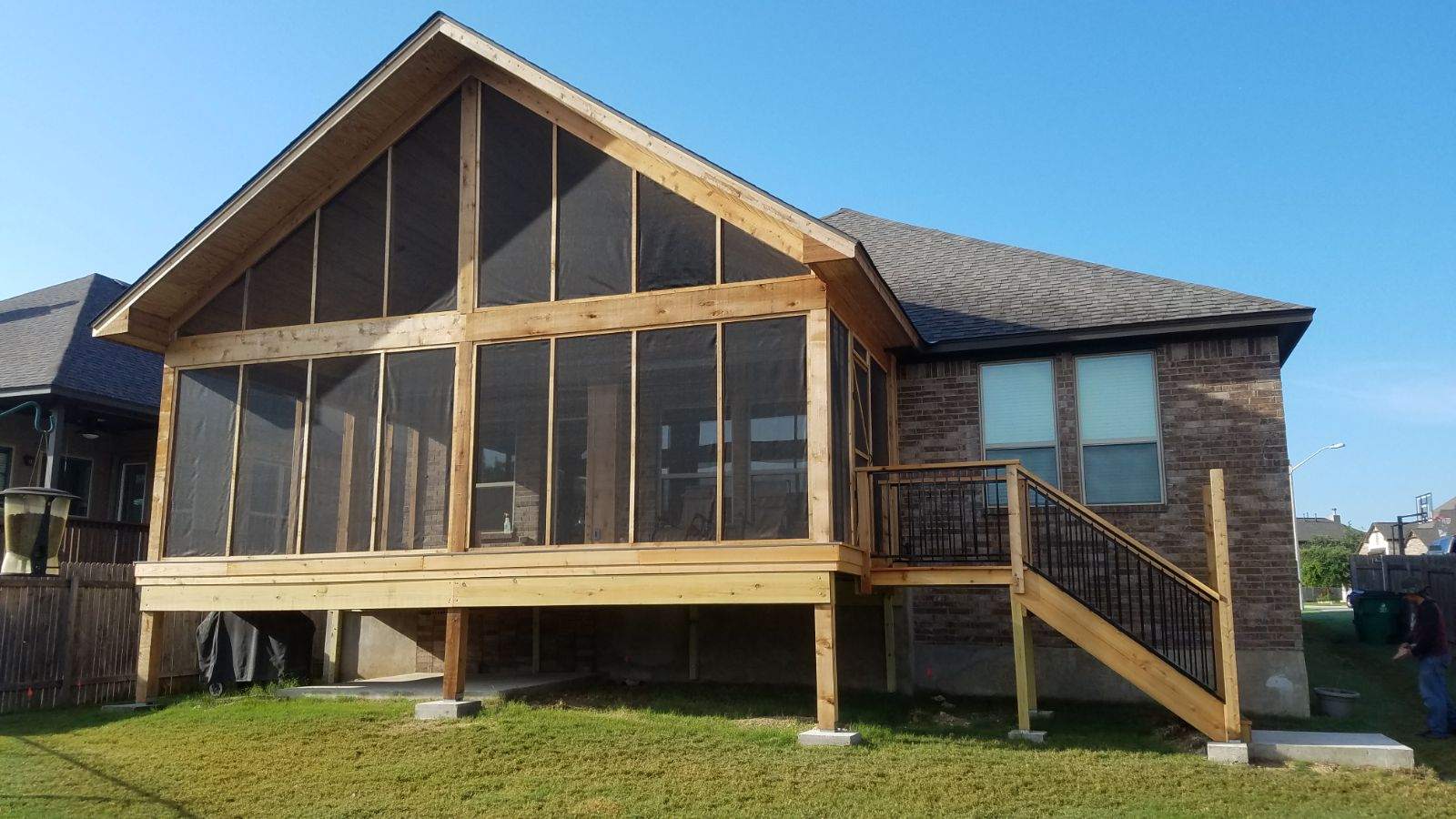
How to Create a Cooler, More Comfortable Outdoor Room for Central Texas
Austin evenings are made for outdoor living, until mosquitoes and summer heat chase everyone back inside. A thoughtfully designed screened-in patio gives you a more comfortable place to enjoy dinner, watch a game, or relax with family while preserving the fresh-air feeling that makes a backyard special.
For homes in Austin, Buda, Dripping Springs, and surrounding Central Texas communities, the right design must do more than keep bugs out. It should manage sun and airflow, fit the architecture, withstand family use, and support how you entertain. This guide explains the decisions that make a screened patio feel like a true extension of your home.
Why Screened-In Patios Work So Well in Austin
A well-designed screened-in patio in Austin creates a comfortable transition between home and backyard, giving your family a place to dine, relax, or entertain with fewer insects.
The best screen-ins do more than attach mesh to an opening. They begin with how you want to use the space, then account for shade, airflow, drainage, sightlines, pets, lighting, and the home’s architecture. When those details work together, the patio feels intentional instead of added on.
A screened enclosure also supports a broader mosquito-control plan. The Centers for Disease Control and Prevention recommends using screens and repairing holes to help keep mosquitoes outdoors. The CDC also advises emptying or covering water-holding containers weekly, because screens reduce exposure but do not eliminate breeding areas around the property.
Start With the Patio Structure You Already Have
Some homes already have a covered patio that can be adapted with framed panels or retractable screens. Other properties need a new patio cover, structural framing, doors, drainage improvements, or a complete outdoor-room design. That difference shapes the project scope and materials.
Before choosing a screen system, have the structure evaluated. Posts, beams, roof connections, floor slope, and attachment points must be suitable for new framing. A professional can also identify gaps beneath railings, roofline openings, or water that drains toward the house.
This is where a design-first approach pays off. Hometown Decking and Outdoor Living can coordinate a screen-in with a custom patio cover, electrical planning, fans, lighting, heaters, or a television so the finished space works as an amazingly cohesive project.
Design for Shade, Airflow, and Everyday Comfort
Screens slow some air movement, so ventilation should be planned rather than treated as an afterthought. Generous screened openings, appropriate ceiling height, and well-placed outdoor-rated fans can help the room feel open and comfortable during warm Central Texas evenings.
Sun exposure matters just as much. A west-facing patio may need deeper roof coverage, privacy panels, or solar-control screening to reduce late-afternoon glare. A north-facing space may stay cooler, but needs a stronger lighting plan. The goal is balanced shade without sacrificing the backyard views you enjoy.
Comfort also depends on the floor and roof. Proper drainage helps prevent damp corners, while insulated or reflective roof options may reduce heat gain around furniture, electronics, or a dining area.
Choose the Right Screen for Your Family
Screen material affects visibility, airflow, durability, and maintenance. Standard fiberglass is popular because it is flexible and offers clear views. Fine insect mesh provides additional protection from smaller pests, but its tighter weave can reduce airflow. Pet-resistant screening is stronger for homes with dogs or cats, while solar screening can reduce glare and heat but creates a darker view.
The right design may combine materials. A family with an active dog can use pet-resistant mesh on lower panels and clearer screening above. A patio near a creek or dense landscaping may call for a finer mesh. A west-facing wall may benefit from solar-control screening while the other sides stay more open.
Frame color and panel proportions matter, too. Dark screens often recede visually, while aligned framing can echo the windows, columns, or trim of the home. Premium results come from treating the enclosure as architecture rather than simply pest control.
Compare Fixed and Retractable Screen Systems
Fixed screens are dependable, clean-looking, and ideal for homeowners who want consistent insect protection. They have fewer moving parts and can be integrated into custom wood or aluminum framing. Screen doors can be positioned for easy access to the yard, pool, garden, or grilling area.
Retractable screens provide more flexibility. They open the patio when conditions are pleasant and lower when insects become active. They work especially well across larger openings where you want to preserve an open-air connection. The tradeoff is a more complex system that requires precise installation and occasional service.
A hybrid design can use fixed panels near landscaping and a wide retractable opening toward the yard. The best choice depends on how often you want the room enclosed, the sizes of the openings, and your preference for simplicity or flexibility.
Plan Lighting, Electrical, and Entertainment Early
A screened patio becomes far more useful when it is designed for evenings from the beginning. Layered lighting creates a warmer atmosphere than a single bright fixture. Consider dimmable recessed lights for general use, task lighting near serving areas, and subtle accent lighting around steps or architectural details.
Electrical outlets, ceiling fans, speakers, and a weather-rated television should be mapped before walls and ceilings are finished. Early planning keeps wiring concealed and lets the builder coordinate switches, fan locations, furniture, and traffic flow.
Cooking requires special attention. Do not assume that an existing grill can be moved inside a screened enclosure. Appliance clearances, heat, smoke, grease, and ventilation must follow manufacturer instructions and applicable codes. In many designs, the grill remains outside while an adjacent serving counter or outdoor kitchen connects the spaces.
Check Permits, HOA Rules, and Project Details
Screen-in requirements vary by jurisdiction and project scope. Adding a roof, changing structural framing, or installing electrical work may involve permits and inspections. Austin homeowners should verify current requirements with the City of Austin Development Services Department, while Buda, Dripping Springs, and unincorporated properties may follow different processes.
HOA approval can be separate. Architectural guidelines may address roof materials, frame colors, setbacks, street visibility, and the degree to which the addition must match the home. Reviewing those rules early helps prevent redesigns after selections are made.
A clear proposal should explain the screen type, framing, doors, roof work, electrical scope, drainage, finishes, and responsibility for approvals. That transparency helps you compare contractors on workmanship and completeness, not simply the lowest number.
Keep Your Screened Patio Looking Its Best
Routine care is straightforward when the enclosure is built correctly. Rinse screens gently, clean frames with mild soap, and inspect door sweeps, latches, screen edges, and lower panels for gaps. Avoid pressure washing the mesh, which can stretch or damage it.
Keep leaves and standing water away from the perimeter, trim plants that rub against the screen, and clean gutters or drains serving the patio cover. Repair damaged panels promptly so small openings do not spread. Retractable systems should be operated and cleaned according to the manufacturer’s instructions.
With thoughtful design and basic maintenance, a screened patio can become one of the most-used spaces in your home.
Build an Outdoor Room You Will Actually Use
The strongest screened-in patios in Austin balance insect protection with airflow, shade, durability, and a design that belongs with the home. Start with the structure, choose screening for your property and lifestyle, and plan comfort features before construction begins.
Hometown Decking and Outdoor Living designs custom outdoor spaces for Central Texas homeowners who value quality craftsmanship and a clear, dependable process. If you are considering a screen-in, patio cover, or complete backyard transformation, request a free site visit and estimate to explore what will work best for your home.
FAQ’s About Screened-In Patios in Austin
Can You Screen in an Existing Covered Patio?
Yes, many covered patios can be screened in, but the posts, roof connections, floor, drainage, and opening sizes should be evaluated first. Some patios need added framing or repairs before a screen system can be installed correctly.
What Type of Screen is Best for Mosquitoes in Austin?
Standard insect screening blocks common mosquitoes, while finer mesh may help with smaller biting insects. The best choice balances pest protection, airflow, visibility, pets, and the amount of sun each wall receives.
Will a Screened-In Patio Still Feel Hot in Summer?
It can if shade and airflow are not planned well. Large openings, ceiling fans, deeper roof coverage, lighter finishes, and solar-control screening on the hottest exposure can improve comfort.
Do You Need a Permit for a Screened Patio in Austin?
Permit needs depend on the address and scope of work. Structural changes, a new roof, electrical work, or plumbing may trigger permits or inspections, so confirm current requirements with the applicable city or county before construction.
Are Retractable Screens Better than Fixed Screens?
Neither option is universally better. Fixed screens are simple and dependable, while retractable screens preserve a wider open-air connection when insects are not a problem. A hybrid design can combine both.
How Do You Maintain a Screened-In Patio?
Gently clean screens and frames, inspect doors and edges for gaps, keep vegetation from rubbing the mesh, and remove leaves or standing water near the enclosure. Repair small tears promptly and follow the manufacturer’s care instructions for retractable systems.

