
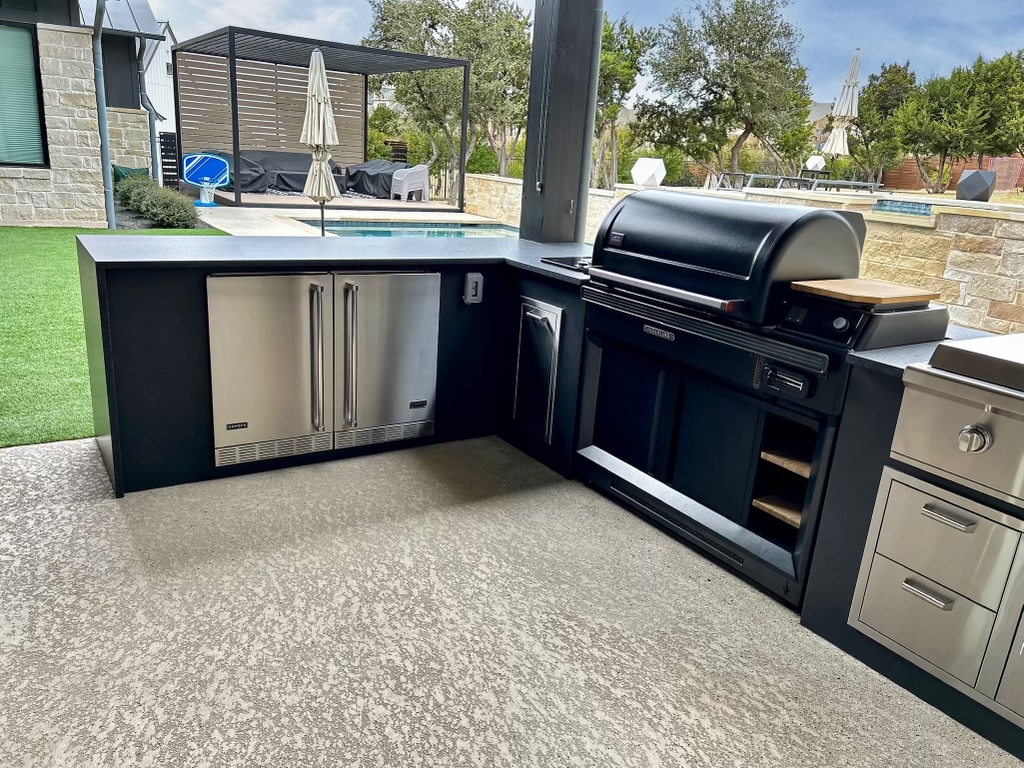
A sunny afternoon can make almost any outdoor kitchen look inviting. The real test is what happens when rain hits the cabinets, the afternoon sun moves across the prep counter, or a freeze is in the forecast.
Weatherproofing your outdoor kitchen in Austin starts with outdoor-rated materials and appliances, shade where you need it, a clear route for rainwater, and a plan to protect plumbing during cold weather. Regular care still matters. Even a covered kitchen needs attention to the surrounding conditions and the instructions for its individual components.
If you’re planning a new space, work those details into the design before choosing the finishing touches. If you already have an outdoor kitchen, use the same questions to identify what needs attention before the next season.
Start With the Sun and Water at Your Site
Spend time in the proposed kitchen area when you expect to cook. A counter shaded at lunchtime may sit in direct sun by dinner. Take photos from the kitchen door and the yard, and note where the cook and guests would stand.
After a rain, look at the same area again. Where does water collect? Does a nearby downspout empty beside the proposed island? Is the route back into the house wet? Bring those observations to the design conversation so the plan addresses your actual yard.
For an existing kitchen, check cabinet interiors after a storm and look for recurring damp spots around appliance openings. Photograph what you find. A repeated wet area gives your builder or the appropriate service professional a specific problem to assess.
Plan Shade and Rain Protection Together
An open pergola can provide partial shade, but its open top doesn’t give you the rain coverage of a solid roof. If keeping the prep and dining areas drier is a priority, discuss a roofed cover and its drainage as part of the kitchen layout. Hometown Decking and Outdoor Living’s patio cover options include several roofing materials you can consider with the rest of the project.
Review the roof edge, posts, gutters, and downspouts on the plan. Ask where runoff will discharge and how the patio will move water away from the kitchen and walking routes. Open sides can still admit rain, so overhead coverage doesn’t remove the need for suitable cabinets and appliances.
The grill needs its own installation review. Confirm the exact model’s clearances, ventilation, and restrictions before adding a roof or enclosure. For example, Weber’s Spirit safety guidance prohibits installing that freestanding grill in a fixed kitchen or using it beneath an overhead combustible structure. A layout that works for one appliance may be unsuitable for another.
Choose Materials by Their Outdoor Specifications
A material name alone does not tell you whether a particular countertop, cabinet or finish belongs outdoors. Ask for the exact product and its written exterior-use requirements, including the exposure and installation conditions covered by the manufacturer.
Countertops and Surrounding Finishes
Review sun exposure, cleaning, sealing requirements, and the area beside the grill with your builder or fabricator. For manufactured surfaces, check the selected collection rather than assuming every product from a brand has the same outdoor suitability. Caesarstone’s Outdoor Collection, for example, specifically identifies surfaces designed for outdoor use and UV resistance.
Request care instructions before making the final selection. You should know whether the chosen surface needs a sealer, which cleaning products are suitable, and how to protect it from hot cookware. Those answers help you choose a finish you’ll be comfortable caring for.
Cabinets, Doors and Utility Access
Look beyond the cabinet face. Review the box, hinges, hardware, and appliance openings as a complete outdoor assembly. Ask how the design handles water at doors and seams and how you will reach shutoffs or remove an appliance for service.
Keep the required ventilation openings clear. Adding sealant or blocking a gap without checking its purpose can interfere with the appliance installation. Have the builder distinguish openings that need weather detailing from those that must remain open.
Check Appliance Limits Before You Buy
An outdoor rating is a starting point. Read the installation and care instructions for each model, including its permitted ambient temperature range, ventilation space, and shutdown procedure. A patio roof doesn’t turn an indoor refrigerator into an outdoor appliance.
The limits can be more specific than expected. Sub-Zero lists a 50°F to 110°F operating range for its UC-15IO outdoor ice maker. That range applies to that model, not to every outdoor appliance. Check the equipment you intend to install against the conditions it will face.
Make a Freeze Plan Before Cold Weather Arrives
A roof helps with overhead rain, but it does not keep outdoor plumbing warm. Include the sink, supply lines, filters, and any water-fed appliances in your freeze plan.
Austin Water’s cold-weather guidance recommends locating the water shutoff, insulating vulnerable pipes, removing garden hoses, and insulating outside faucets. For a kitchen with its own plumbing, have a licensed plumber explain how your particular lines can be isolated and drained, and what still needs protection. Get that explanation before a freeze is imminent.
Water-fed appliances may need a separate procedure. Sub-Zero’s winterization guidance explains that water can remain inside an ice maker even after the supply line is drained. Some models require service by a qualified provider. Follow your equipment’s instructions rather than relying on generic advice to turn off the water.
If you will be away during cold weather, arrange the necessary preparation before leaving. Keep your plumber’s or appliance service provider’s contact information with the manuals.
Keep Seasonal Care Simple and Specific
Build your routine around the materials and equipment you actually own. Use the schedule below as a reminder, then follow the product instructions for cleaning, inspections, and seasonal shutdown.
| When | What to check |
|---|---|
| Before the hottest months | Revisit afternoon shade over the prep and seating areas. Check appliance temperature limits and keep the required ventilation space clear. |
| Before storms and after rain | Secure loose items and suitable covers before bad weather arrives. Once conditions are safe, look for wet cabinet interiors, blocked drainage or repeated pooling. |
| Before freezing weather | Follow the documented plumbing and appliance winterization procedures. Allow time for a plumber or appliance service visit if the instructions require one. |
| Before returning to regular use | Inspect for damage, clean according to the manuals and complete the manufacturer’s restart checks before using equipment again. |
Between uses, a correctly fitted grill cover can help protect the appliance. Let the grill cool completely before covering it. Weber’s Spirit storage instructions make that cooling step explicit and also call for cleaning and inspection after storage. Use the equivalent instructions for your own grill.
Put the Weather Details in Your Project Plan
The most useful handoff includes more than a list of finishes. Ask for the appliance model numbers and manuals, surface care instructions, the drainage approach, and an explanation of the plumbing shutoffs and seasonal preparation. Review which tasks you can handle and which need a service professional.
If you’re still deciding what belongs in the space, our outdoor kitchen features guide can help you think through the broader layout. Then use the weather questions here to make that plan more specific to your home.
Hometown Decking and Outdoor Living designs and builds custom outdoor kitchens in Austin as part of a complete outdoor living space. Request a project consultation and bring your ideas, site photos and priorities. We can discuss the kitchen, patio, and overhead coverage together so the design supports how you want to cook and spend time outside.
Frequently Asked Questions About Outdoor Kitchen Weatherproofing
Can an outdoor kitchen stay outside all year in Austin?
Yes, an outdoor kitchen can remain installed year-round when its components are suitable for the site and receive the required care. That doesn’t mean every appliance can operate in every temperature. Check each model’s operating limits and winterization instructions.
Does a covered outdoor kitchen still need freeze protection?
Yes. Overhead shelter does not protect water lines from freezing temperatures. Have a plumber identify the exposed plumbing and explain the preparation your installation needs. Water-fed appliances also need the manufacturer’s winterization procedure.
Will a pergola keep an outdoor kitchen dry?
An open-top pergola provides partial shade, not continuous rain coverage. If overhead rain protection matters, discuss a suitable roof system and drainage with your builder. Rain entering from open sides still needs to be considered.
How often should I seal outdoor kitchen countertops?
Follow the care instructions for the exact countertop and finish. Ask the supplier whether sealing is required and what determines the reapplication schedule. Avoid putting every surface on the same annual sealing routine.
Can I use an indoor refrigerator under a patio cover?
Do not assume the cover makes it suitable. Choose refrigeration explicitly approved by its manufacturer for the intended outdoor installation, and check its temperature and ventilation requirements. Shelter alone doesn’t establish that an indoor appliance can be used outdoors.

