
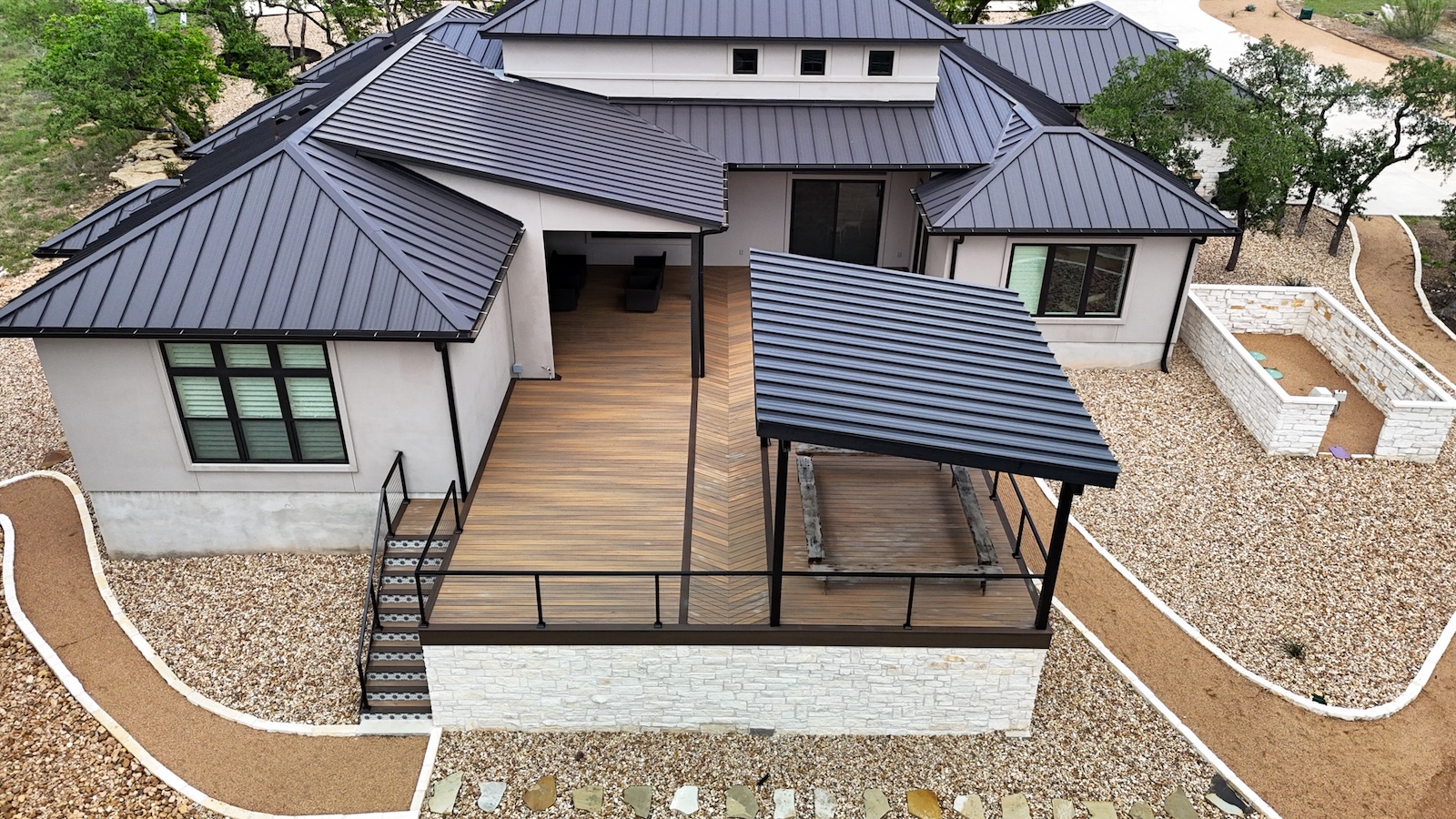
When you are planning a new deck in Austin, it is easy to focus on the boards, railings, lighting, and how the finished space will look from the backyard. But the frame is what decides how that finished deck feels years from now. That is why the steel frame vs wood deck decision deserves a real conversation before you choose materials.
For many Central Texas homeowners, the best answer depends on three things: how long you plan to stay in the home, how much upfront budget matters, and whether you are pairing the frame with premium composite or PVC deck boards. Steel is the long-term upgrade. Wood is the familiar, budget-friendly standard. Both can be right, but they solve different problems.
Quick Answer: Steel is the Upgrade, Wood is the Standard
Steel deck framing is usually the better fit when you want a premium deck with cleaner lines, less structural movement, and lower risk from rot, insects, and moisture over time. It makes the most sense under high-end decking, on elevated or visible structures, and on homes where fire-conscious material choices are part of the discussion.
Wood deck framing is still a smart fit when the project is straightforward, the frame is mostly hidden, and keeping the initial investment lower is the main priority. It is widely available, familiar to builders and inspectors, and still a legitimate choice when it is designed, protected, and maintained well.
Why Austin Homeowners Are Comparing Deck Frames Now
Outdoor living is not slowing down. Fixr’s 2025 Outdoor Living Trends report found that 56% of surveyed experts said homeowners were more willing to invest in outdoor spaces than the year before, and 98% said an updated outdoor living space has a major impact on home value. The same report named composite decking the top patio flooring pick for 2025, selected by 46% of experts.
That matters because composite and PVC deck boards can carry long warranties and stay beautiful with far less upkeep than traditional wood boards. Once homeowners invest in a surface designed to last for decades, they naturally start asking whether the hidden frame should be built to the same standard.
Austin adds another layer to the decision. The City of Austin’s Wildland-Urban Interface guidance says heavy timber, metal, steel, masonry, or cement-based materials can be used for deck framing in certain WUI situations. It also explains that standard exterior wood framing may still be used in some cases when the entire underside is fully enclosed with ignition-resistant skirting. That is not a reason to panic. It is a reason to get a local, project-specific recommendation instead of relying on generic national advice.
What Steel Deck Framing Does Well
Steel framing is about consistency. A steel joist does not absorb moisture the way lumber does, and it is not vulnerable to rot or termite damage. That gives the finished deck a more stable foundation, especially when the design includes long runs of composite boards, clean stair lines, cable rail, or a modern outdoor living layout where small imperfections are easy to see.
Fortress Evolution steel deck framing, one of the systems Hometown Decking and Outdoor Living already discusses in its Fortress steel frame deck guide, is backed by a 25-year limited warranty for galvanized and powder-coated components. Fortress states that the product is warranted to retain structural integrity for 25 years from the original purchaser’s date of purchase, subject to the warranty terms and exclusions.
The homeowner’s benefit is simple: steel helps protect the quality of the deck you are investing in. If the surface boards are premium, low-maintenance, and designed to stay attractive for years, a straighter and more dimensionally stable frame helps the whole project feel more refined.
Where Steel Needs an Honest Budget Conversation
Steel costs more upfront than traditional pressure-treated wood framing. There is no need to pretend otherwise. The right way to evaluate it is not just “what does the frame cost today?” It is “what does this frame protect, prevent, and support over the life of the deck?”
Fortress published a side-by-side case study of two matching 16-foot by 18-foot decks and reported that the steel-framed build used 34% fewer labor hours than the wood-framed build. The same manufacturer-sponsored study said the total project cost gap narrowed after labor, even though the steel framing material cost more. That is useful directional information, but it should not be treated as a guaranteed Austin bid. Your actual cost depends on design, access, stairs, elevation, layout, and installer experience.
Installation details matter too. Fortress warranty documents call for cut ends and exposed scratches to be coated, debris to be removed from inside parts, and steel shavings or chips from cutting to be removed from the jobsite. In other words, steel is not “set it and forget it” for the builder. It is a premium system that needs premium execution.
What Wood Deck Framing Still Does Well
Wood remains common because it works, builders know it, and it usually keeps the initial price lower. For a simple deck where the frame is hidden and the homeowner is more focused on getting a solid outdoor space than building a long-term showpiece, wood can be a practical choice.
Pressure-treated wood also exists for a reason. The U.S. Forest Service notes that wood used outdoors can be vulnerable to fungal decay and insect damage when exposed to moisture, and pressure treatment is the most common method for protecting wood from biological deterioration. That does not make wood equal to steel. It means the right treatment, design, and installation practices matter.
Wood also fits projects where budget flexibility is limited. If choosing steel forces a homeowner to compromise on the deck size, safety details, railings, shade, or the way the space actually functions, wood may be the smarter overall decision. The best material choice is the one that supports the whole project, not just one line item.
Where Wood Has Real Trade-Offs
Wood is a natural material, so movement is part of the package. Oregon State Extension explains that even dried solid wood products shrink and swell as they gain or lose moisture, and these moisture changes can increase the risk of issues such as staining, decay, and insect infestations. On a deck frame, that movement can show up as twisting, crowning, checking, or slight changes that affect the finished surface above.
Structural design also needs to account for exterior exposure. The American Wood Council’s Prescriptive Residential Wood Deck Construction Guide uses span and footing tables that assume wet service conditions for many residential deck components. That is a reminder that decks are not indoor framing. They live outside, and the frame has to be selected and detailed for that reality.
None of this means wood is a bad choice. It means wood asks more from the project over time. It needs proper flashing, drainage, hardware, ventilation, inspection, and awareness of maintenance. When those details are ignored, the lower upfront cost can become a more expensive long-term ownership experience.
How to Choose the Right Frame for Your Austin Home
Choose steel framing if you are building a premium deck, pairing it with composite or PVC boards, planning to stay in the home for years, or designing a structure where the stairs or underside will stay visible. Steel is also worth serious consideration if WUI requirements, fire-conscious design, or long-term structural confidence are part of the conversation.
Choose wood framing if the project is simpler, the budget is tighter, and the structure is mostly out of sight. Wood can also make sense when you want to preserve more budget for the features you will experience every day, such as a larger footprint, better shade, railings, lighting, or a connected patio design.
Before deciding, ask your builder these questions:
- What frame material do you recommend for this specific design and why?
- How will drainage, flashing, ventilation, and fastener selection be handled?
- If we use composite or PVC boards, will the frame life reasonably match the surface investment?
- Do any Austin WUI requirements affect this property or design?
- What warranty applies to the material, and what installation details are required to preserve it?
A good contractor should be able to answer those questions plainly. If the recommendation feels like a sales pitch instead of a tailored design conversation, keep asking.
Build the Deck Around the Way You Want to Live Outside
The frame is not the glamorous part of a deck, but it is the part that protects the experience you are trying to create. Steel framing usually fits homeowners who want a long-term, premium outdoor living space with fewer structural worries. Wood framing fits homeowners who want a practical, cost-conscious solution and understand the maintenance trade-offs.
At Hometown Decking and Outdoor Living, the goal is not to force every homeowner into the most expensive option. The goal is to help you build the right deck for your home, your budget, and the way your family wants to use the backyard. If you are comparing steel deck framing, wood deck framing, or the best surface to pair with either one, explore our custom deck design and build services, read our composite vs wood decking guide, or contact Hometown Decking to schedule a conversation.
FAQ’s About Steel Frame vs Wood Decks in Austin
Is Steel Framing Better Than Wood for a Deck?
Steel framing is usually better for premium, long-term decks where stability, rot resistance, and a clean finished surface matter. Wood framing can still be better for simpler projects where upfront cost is the main priority.
Is Steel Deck Framing Worth the Extra Cost?
Steel deck framing can be worth the extra cost when you plan to stay in the home, use premium composite or PVC boards, or want to reduce long-term structural maintenance risk. It may not be necessary for a basic, budget-first deck.
Does Steel Deck Framing Rust in Austin?
Steel deck framing is designed for exterior use, but proper installation still matters. Cut ends, scratches, and steel shavings should be handled in accordance with the manufacturer’s instructions to help protect the coating system.
Can You Put Composite Decking Over a Wood Frame?
Yes. Composite decking is commonly installed over pressure-treated wood framing. The key question is whether you are comfortable placing a long-warranty surface over a frame that can move, twist, or require more maintenance over time.
Do Austin WUI Rules Require Steel Deck Framing?
Not for every property. The City of Austin says heavy timber, metal, steel, masonry, or cement-based materials can be used for deck framing in certain WUI situations, and standard exterior wood framing may be allowed in some cases with ignition-resistant skirting. Always verify requirements for the specific property and permit.
Which Deck Frame Is Best for Resale Value?
A well-designed, well-built outdoor living space usually matters more to resale than the hidden frame material alone. Steel can support a premium value story when buyers care about low maintenance and long-term performance, while wood can still add value when the deck is attractive, safe, and well-maintained.

