
A Practical Comparison for Central Texas Heat, Clay Soils, and Long-Term Maintenance
If you are planning a new patio, the stamped concrete vs pavers decision usually comes down to three things: the look you want, how your yard handles movement and drainage, and how much maintenance you are comfortable with over time. In the Austin area, the ground and weather matter more than most national guides admit. Many homes sit on shrink-swell clay that expands when wet and contracts when dry, which can stress rigid surfaces.
Below is a clear, homeowner-friendly comparison to help you choose confidently, plus the questions we recommend asking any patio builder before you commit.
Quick Answer: When Each Option Makes Sense
Stamped concrete is often a strong fit when:
- You want a seamless, modern surface with fewer visible joints.
- Your site can be graded and drained well, and you are comfortable resealing periodically.
- You prefer a lower upfront investment compared to premium paver systems.
Pavers are often a strong fit when:
- Your property is more likely to shift (common in Central Texas clay), and you want a surface that can be re-leveled.
- You want maximum design flexibility (patterns, borders, mixed tones).
- You want simpler spot repairs without obvious patchwork.
How Austin Soil and Weather Affect Patio Performance
Austin and the surrounding Hill Country and Blackland Prairie regions see real seasonal moisture swings. Expansive (shrink-swell) clay soils can heave when moisture rises and settle as they dry out, which is why Texas building guidance emphasizes how moisture changes can lift or settle structures. The USDA’s Texas soil mapping also highlights areas of clayey soils with high shrink-swell properties across the region.
That matters because:
- A stamped concrete patio is a single slab. When the subgrade moves unevenly, the slab can crack. Control joints help manage cracking, but they do not eliminate movement risk.
- A paver patio sits on a compacted base with many small units. That system can tolerate minor movement, and if a section settles, pavers can be lifted, the base adjusted, and the pavers reset.
This is not about one material being “good” and the other being “bad.” It is about matching the system to your site conditions, drainage plan, and expectations.
Design And Curb Appeal: The Look You Want
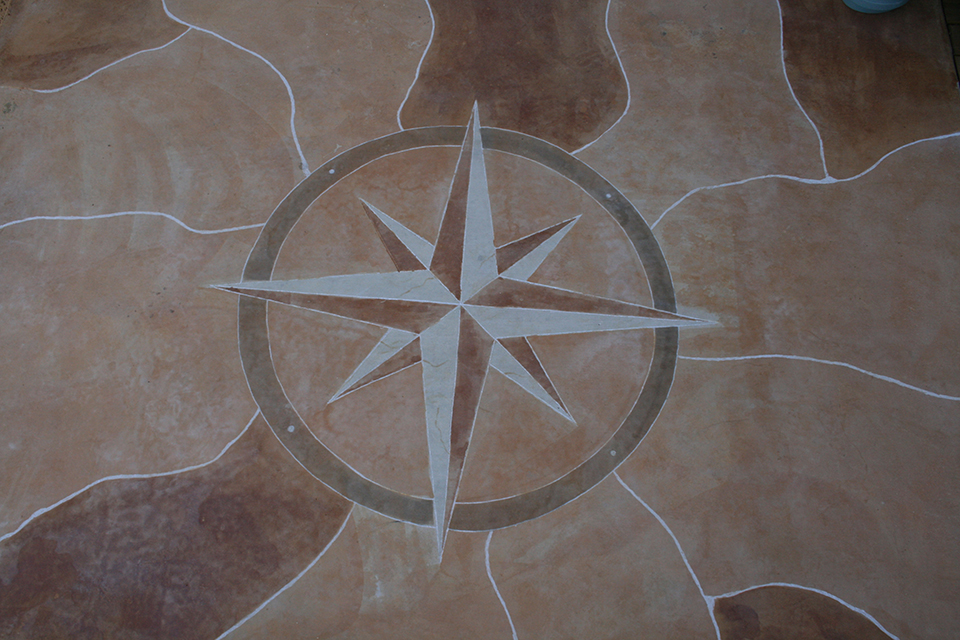
Stamped concrete delivers a continuous surface that can mimic stone, slate, brick, or even wood plank textures. It pairs nicely with contemporary and transitional homes, especially when you want clean lines and a simpler visual field.
Interlocking pavers create a crafted, architectural look. Because pavers come in many sizes, finishes, and color blends, you can build everything from subtle borders to bold herringbone or basket weave patterns. If your home has limestone, brick, or layered masonry, pavers make it easier to echo those textures across walkways and outdoor living areas.
Durability And Repairability Over Time
Stamped concrete can last for years when the base is prepared correctly, joints are placed well, and the surface is resealed as needed. The risk is that cracks can be hard to repair invisibly. Even a good patch often reads as a patch because color and texture rarely match perfectly once the slab has weathered.
Pavers are designed to be serviceable. When utilities need access under the patio or when a section settles, interlocking pavers can be removed and reinstated, then reused. Industry guidance also notes that paver surfaces can often be corrected through maintenance and reinstatement rather than total replacement.
Maintenance: Sealing, Cleaning, And Color Stability
Stamped concrete usually needs periodic sealing to help protect against moisture intrusion, UV fading, and surface wear. If your patio gets full afternoon sun, that reseal cycle becomes part of responsible ownership.
Pavers typically require simpler routine care:
- Rinse or gently wash as needed.
- Replenish joint sand periodically.
- Replace a stained or damaged unit if it ever bothers you.
Because pavers are colored through the full body of the unit, normal wear and sun exposure tend to be less noticeable than on a surface-treated slab.
Comfort And Safety: Heat And Slip Resistance
Austin summers are no joke. Both surfaces can heat up, but lighter color palettes usually stay more comfortable underfoot. If your patio will border a pool, hot tub, or outdoor shower, traction matters. Textured pavers can provide grip when wet, and they are commonly used around water features for that reason.
Stamped concrete can also be made safer with the right finish and a slip-resistant additive in the sealer, but you will want to keep up with resealing if the patio sees frequent splash zones.
Drainage And Sustainability: Permeable Pavers Vs Solid Slabs
Drainage is a design decision, not an afterthought. Traditional stamped concrete is impermeable, so all water must run off the surface to edges, drains, or swales. If grading is off by even a small amount, you can end up with puddling or water moving toward the home.
Permeable pavement systems, including permeable pavers, allow water to infiltrate through the surface into underlying layers. This can reduce stormwater runoff and help filter pollutants. Research summaries from the U.S. Geological Survey also describe permeable pavement as a way to reduce runoff volume and peak discharge by encouraging water to soak in rather than rush to storm drains.
Cost And Long-Term Value In The Austin Market
In most Austin-area bids, stamped concrete tends to price lower upfront because it is faster to install as a monolithic pour. Pavers usually cost more because base preparation and installation are labor intensive.
The value conversation changes over time:
- If you prioritize lower initial cost and are fine with maintenance, stamped concrete can be a smart choice.
- If you prioritize repairability, long-term appearance, and flexibility on active soils, pavers often justify the higher starting investment.
How to Choose With Confidence: A Simple Checklist
Before you sign a contract with any patio builders in Austin, TX, ask:
- What is the base preparation plan (depth, compaction method, and materials)?
- How will drainage be handled (grade, edge details, and runoff direction)?
- For stamped concrete – where will control joints be placed and why?
- For pavers – what edge restraints and jointing method will be used?
- What maintenance do you recommend, and what does it cost over time?
A great contractor will answer those questions clearly and show you examples from local projects with similar site conditions.
Ready to Make Your Patio Beautiful?
The best patio surface is the one that fits your home, your design taste, and your tolerance for maintenance. If you want a seamless look and a lower upfront price, a stamped concrete patio can be a great solution on the right site. If you want a high-end, modular surface that can be serviced and re-leveled over time, a paver patio is often the safer bet for Central Texas soils.
If you would like help evaluating your yard and design goals, Hometown Decking can walk you through material options, drainage planning, and the details that make a patio last.
FAQ’s About Stamped Concrete Vs Pavers In Austin
Is Stamped Concrete Or Pavers Better For Austin Clay Soil?
Pavers are often a better match for active clay because the system can flex and be re-leveled if the base shifts. Stamped concrete is more rigid, so it is more vulnerable to visible cracking when movement is uneven. The best choice depends on your soil, drainage, and base preparation.
How Long Does A Stamped Concrete Patio Last In Austin?
A well-built stamped concrete patio can last many years, but it typically needs periodic resealing and can develop cracks over time. Longevity depends heavily on base prep, joint layout, drainage, and how consistently it is maintained.
Can You Repair a Paver Patio Without Replacing the Whole Thing?
Yes. One of the biggest benefits of interlocking pavers is that sections can be lifted and reinstated for access or leveling, then put back into place
Are Permeable Pavers Worth It In The Austin Area?
They can be, especially on lots that struggle with runoff or pooling. Permeable pavement systems are designed to let water infiltrate and can reduce stormwater runoff.
Which Patio Surface Is Easier To Maintain: Stamped Concrete Or Pavers?
Pavers are typically easier because you can address small issues locally (re-sand joints, replace a single unit, re-level a section). Stamped concrete usually involves resealing on a schedule, and crack repairs can be difficult to blend.
What Should I Ask A Contractor Before Building A Patio In Austin?
Ask about base depth, compaction approach, grading and drainage, and what warranties cover. Also ask what maintenance they expect you to do and what it costs over time. Those details matter more than the material label.

