
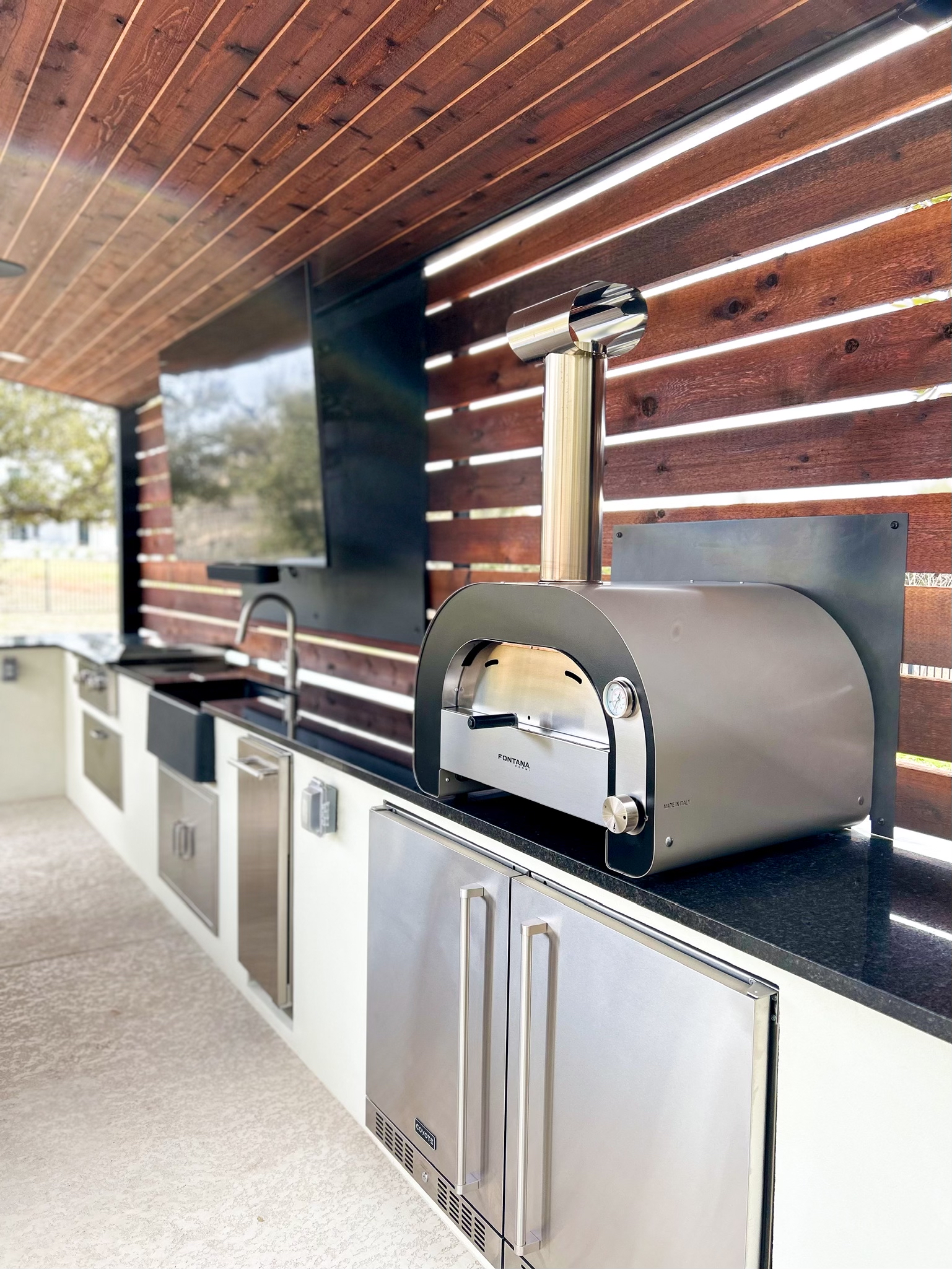
A design-forward checklist for Central Texas grill masters who want a backyard that works for weeknights and weekends
In Texas, grilling is not just a hobby. It is how you host, unwind, and make memories. If you are planning an outdoor kitchen in Austin, TX backyard in 2026, the big win is building for the climate first: shade that feels good in August, materials that do not warp or rust, and a layout that keeps you cooking instead of running back inside.
Central Texas heat is no joke. The National Weather Service notes that Austin’s heat index can push above 110 degrees at times.
Use the checklist below to build (or upgrade) an outdoor kitchen that is comfortable, durable, and easy to entertain in.
1. A layout built for real cooking and real crowds
Start with flow. You want space to cook, space to prep, and space for guests to gather without getting in your way.
Most high-function outdoor kitchens include:
- Hot zone: grill, smoker, or side burner plus a landing area for trays
- Prep zone: a clear countertop run for slicing, seasoning, and plating
- Cold zone: an outdoor fridge or refrigerated drawers near prep
- Clean up zone: trash, recycling, and ideally a small sink
If your kitchen is going on a raised platform, make sure the structure is engineered for appliance weight and foot traffic. This is where experienced deck builders Austin, TX homeowners trust can help you avoid bounce, drainage issues, and premature wear.
2. Weather-resistant materials that stay beautiful in Central Texas heat
Central Texas weather brings heat, UV, wind-driven rain, and the occasional hard freeze. Your surfaces need to handle all of it.
Countertops that can take heat and spills
For 2026, the most reliable choices are:
- Sealed granite or quartzite
- Sintered stone or porcelain slabs (low porosity and easy cleanup)
- Poured concrete with an outdoor-rated sealer
Tip: lighter colors are often more comfortable in full sun and help brighten the space at night.
Stainless steel that matches your exposure
Stainless cabinets and access doors are a smart move outdoors, but grade matters. Outokumpu notes that 316L has high resistance to chloride-containing media due to its higher molybdenum content, which can be worth it for salt or heavy pool-chemical exposure.
Around Austin, Buda, and Dripping Springs, 304 stainless is often a solid fit when you keep it clean and covered.
A low-maintenance floor around the kitchen
If the kitchen connects to a deck, composite decking, homeowners choose for low maintenance can be a great pairing with a grill island. If you are doing a full build, confirm deck construction plans include proper airflow and drainage underneath so the structure dries out after storms.
3. Shade and cooling that makes you want to cook outside
Shade is not a luxury in Central Texas. It is a usability feature.
Two popular options are patio covers families use for full sun protection and pergolas for a lighter, open-air feel. When you compare pergolas, ask about fan support, roof options, and how rain will drain away from your cook zone.
Comfort upgrades that make a difference:
- Outdoor ceiling fans over cook and seating areas
- Misters installed at the perimeter (so prep stays dry)
- Heat-resistant LED task lighting at the grill and counters
4. Storm-proof details and drainage that protect your investment
A little planning here saves a lot later:
- Slightly sloped surfaces so water does not puddle
- A drain strategy (graded patio, channel drain, or French drain)
- Outdoor-rated access doors and sealed utility chases to keep moisture and pests out
- Quality covers for grills and appliances when not in use
If your kitchen sits under a roof, add gutters and downspouts that direct runoff away from the cooking and walking areas.
5. Grilling technology that helps you cook with confidence
Smart temperature control and monitoring
Wi-Fi and Bluetooth grills are popular for a reason. A good probe and app monitoring help you stay in range while you handle sides and guests.
Multi-fuel flexibility for true Texas flavor
A modern pitmaster setup often combines:
- Gas for fast weeknight cooking
- Charcoal or wood for smoke-forward weekends
- Built-in storage for wood, charcoal, and ash tools
This keeps you flexible without crowding the cook area.
6. Power, plumbing, and safety features you should not skip
This is where good design protects your family and your investment.
Plan for:
- Enough outlets for real use (fridge, pellet smoker, lights, music)
- Outdoor GFCI protection, especially near sinks and prep areas. The City of Austin has published guidance tied to NEC 210.8(F) for outdoor outlets at dwellings.
- An easy-to-reach gas shutoff valve if you have gas
- Ventilation if your grill is under a roof or inside a tight enclosure
- Task lighting where you actually prep and cook
7. Storage, refrigeration, and entertainment for Texas-sized gatherings
A great outdoor kitchen keeps the party moving:
- Outdoor-rated refrigeration for drinks and ingredients
- Drawer storage for tools, foil, gloves, and cutting boards
- A pull-out trash and recycling center to stay clean mid-cookout
- Weather-rated speakers and a glare-controlled TV location for game day
The goal is simple: everything you need is outside, organized, and within reach.
Your next step
The best outdoor kitchens are not built on napkin drawings. They are built on smart layout, durable materials, and comfort features that make you want to use the space year-round.
If you are planning an outdoor kitchen in Austin, TX backyard, and want a design that holds up to Texas heat and storms, Hometown Decking can help you dial in the layout, materials, shade, and utilities from day one. Learn More Here
Ready to talk through your ideas and get a clear plan and estimate? Contact our team HERE or by phone: 512-663-1248
FAQ’s About Outdoor Kitchens in Austin, TX
How much does an outdoor kitchen cost in Austin, TX?
Outdoor kitchen pricing varies widely based on size, appliance brands, utility runs (gas, water, electric), and finishes. A simple grill-and-counter setup costs far less than a full build with refrigeration, masonry, and a roofline.
Do I need a permit for an outdoor kitchen in Austin or nearby cities?
Often, yes, especially if you are adding new electrical circuits, gas lines, plumbing, or a patio cover structure. Permit rules vary by city and by scope, so it is smart to confirm requirements with your local building department before construction starts.
What is the best countertop material for Texas heat?
Sealed granite, quartzite, and sintered stone are popular because they hold up well outdoors and clean up easily after messy cookouts. If you love the look of concrete, make sure it is finished with an outdoor-rated sealer and thoughtful drip edges.
Is 304 or 316 stainless better for an outdoor kitchen?
For many outdoor kitchens around Austin, 304 stainless is a dependable option when it is cleaned and protected with covers. If your site has heavy salt or pool-chemical exposure, 316L stainless can offer better corrosion resistance.
Should I choose a patio cover or pergola over my outdoor kitchen?
If you want maximum shade and rain protection, a solid patio cover is usually the best choice. If you want filtered light and a more open feel, a pergola can be a great fit, especially when paired with a fan and a smart rain plan.
Are smart grills worth it for Texas BBQ?
If you cook for groups or run multiple dishes at once, smart grills can be worth it because they help you monitor temps without hovering. Pair the tech with good technique and a reliable thermometer for consistent results.

