
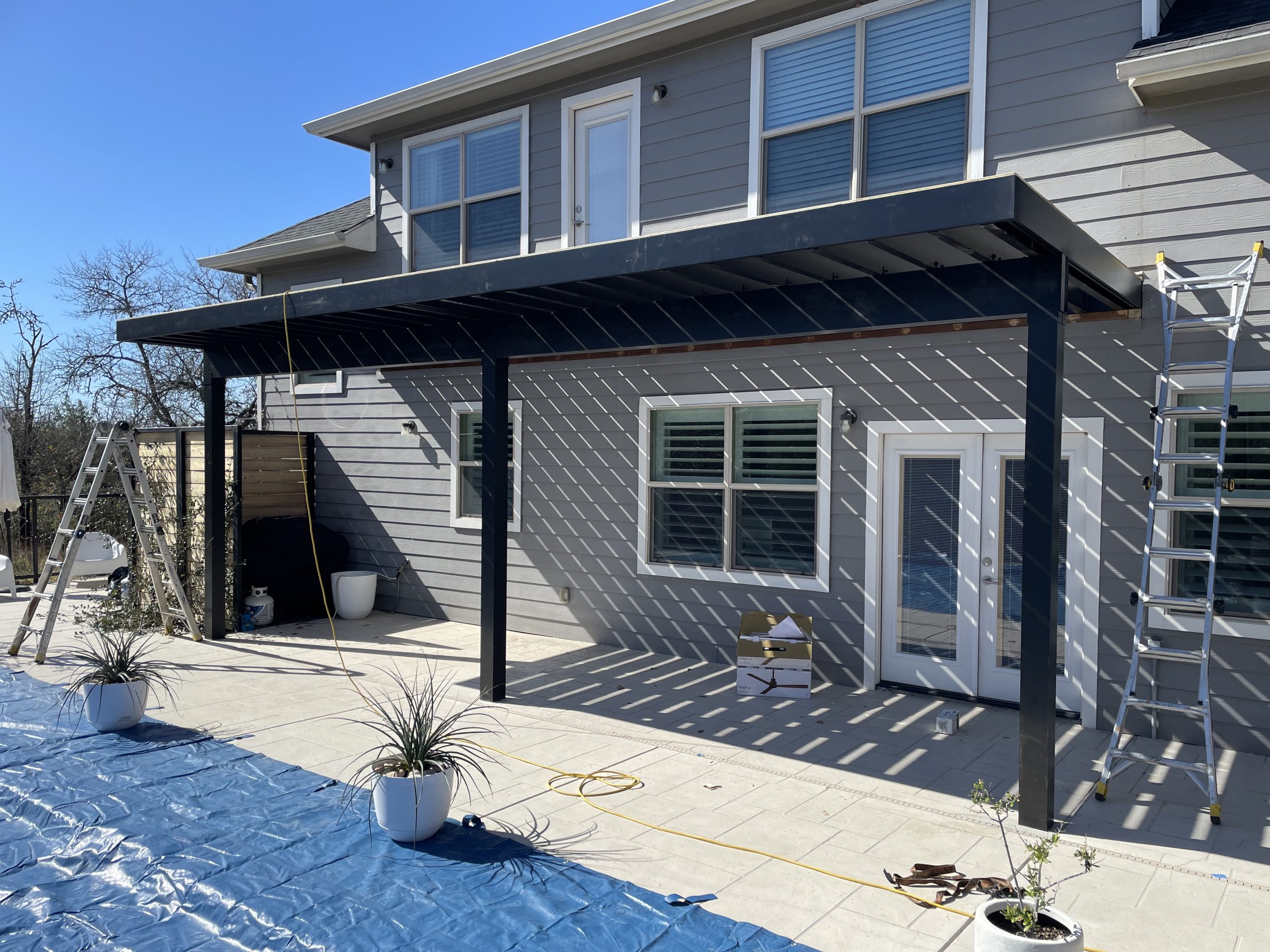
A practical look at steel deck framing, steel stair framing, and when the upgrade is worth it in Central Texas.
Austin homeowners are putting premium money into composite and PVC decks, and a smart question keeps coming up: should a premium deck surface sit on a wood frame that may move, twist, or age sooner than the boards above it? That is where the Fortress steel frame deck conversation starts.
A Fortress steel frame deck uses Fortress Evolution steel deck framing, a metal deck framing system that replaces traditional wood joists and beams with galvanized, powder-coated steel components engineered to work together. For many Austin-area projects, that brings real advantages. It can stay straighter, resist rot and insect damage, and pair especially well with premium low-maintenance decking. It also costs more upfront and needs a builder who knows the system well.
If you are weighing steel vs wood deck framing for an Austin home, here is the practical answer – steel is usually the upgrade people choose when they care about long-term performance, cleaner lines, and lower structural maintenance risk. It is not the right answer for every deck, but it is a serious option for the right project.
The Quick Answer
For many premium Austin decks, a Fortress steel frame deck is worth it when long-term performance matters more than the lowest upfront cost. It gives homeowners a straighter, lower-maintenance structural system under the finished deck boards, and it is especially appealing when stairs stay visible, clean design matters, or wildfire-conscious material choices are part of the conversation.
What a Fortress Steel Frame Deck Actually Is
According to Fortress’s official product materials, Evolution is an engineered system built around steel deck joists, steel deck beams, brackets, and a matching stair system, not a pieced-together substitute for lumber. Fortress also states that the system is backed by a 25-year limited warranty, and Intertek’s CCRR-0313 evaluates Evolution steel framing for structural deck framing use. In plain English, that means this is a purpose-built system designed to replace wood below the finished deck surface.
Fortress also positions Evolution as compatible with most decking types, including composite, PVC, and wood. That matters because the decision is not really about what you see on top. It is about what will still be performing underneath after years of Texas sun, storms, and seasonal movement. Because steel components are manufactured, they arrive straighter and more dimensionally consistent than typical framing lumber. When the structure stays flatter, the finished deck usually looks cleaner and feels more solid over time.
Why Steel Deck Framing Has Extra Relevance in Austin
Austin is hard on exterior structures. Heat, UV exposure, humidity swings, and sudden downpours all put pressure on a deck. Pressure-treated wood still works and remains common, but homeowners who want a longer-lasting structure are increasingly asking whether wood is the weak link under a premium outdoor living space.
The City of Austin’s current WUI Approved Materials List includes Evolution Steel Deck Framing and the Evolution Steel Deck Stair System as accepted non-combustible, Class A options. That does not mean every deck in Austin needs steel, and final approvals should always be verified for the specific project. It does mean steel framing deserves attention for homes in wildfire-sensitive or WUI-conscious parts of the greater Austin area.
There is also a design reason this topic is gaining traction locally. Many Austin and Hill Country homes lean modern or transitional, with cleaner lines, cable rails, and low-maintenance finishes. Steel framing fits that mindset well because it supports a more precise substructure beneath premium finishes.
The Biggest Advantages of Fortress Evolution Steel Deck Framing
The biggest advantage is simple: steel helps preserve the quality of the deck you are spending real money to build. Composite and PVC boards tend to look better when the frame below stays flatter. Wood can crown, twist, shrink, and telegraph those imperfections upward. Steel gives the finished surface a more stable skeleton.
It also resists the problems that usually begin underneath a deck. Steel will not rot or feed termites, and it is not vulnerable to the same moisture-driven movement as wood. For Austin homeowners who want to reduce long-term structural maintenance risk, that is usually the strongest part of the value proposition. You are not just buying a different framing material. You are buying a different maintenance outlook.
Fortress also highlights greater span potential and a more consistent profile than typical lumber. In real projects, that can open the door to cleaner sightlines, fewer posts in some layouts, and a more refined finished look. Not every deck will use those advantages, but they can matter on custom designs where aesthetics and function carry equal weight.
Why Steel Stair Framing Gets So Much Attention
Steel stair framing is one of the most compelling parts of this category. Fortress offers a dedicated steel stair system that uses coordinated components designed to work with the framing line. When deck stairs are visible from the yard or beneath an elevated deck, steel can create a cleaner, more intentional appearance than bulky wood stringers. That is especially attractive on contemporary Austin homes, hillside properties, and projects with cable rail or other premium finishes.
The Drawbacks and Trade-Offs
The first drawback is cost. A steel frame deck usually comes in higher than a pressure-treated wood frame, sometimes enough to change the whole project discussion. If your priority is getting a straightforward deck built at the lowest upfront cost, wood may still be the better fit.
The second drawback is installation experience. A premium framing system only pays off when it is installed like one. The builder needs to understand fastening details, cuts, coatings, layout, and the specific requirements of the product. That is one reason homeowners should not compare steel framing bids on price alone. The quality of the installer matters just as much as the material.
The third trade-off is expectation. Steel does not replace proper footings, drainage, attachment details, or smart design. It upgrades the structural layer underneath the deck, but it does not fix a poorly planned project. And if you are building a modest deck where the structure is hidden, the stairs are simple, and long-term perfection is not the main goal, pressure-treated wood can still be a reasonable choice.
Steel vs Wood Deck Framing: When Steel Makes Sense
Steel framing usually makes the most sense when:
- You are pairing the structure with premium composite or PVC boards and want the frame to better match the life expectancy of the finish.
- The stairs or underside will stay visible and you care about clean lines.
- The home is a long-term hold, not a short ownership window.
- You want to lower your exposure to rot, termites, and structural movement over time.
- WUI-approved or non-combustible materials are part of the conversation.
Wood framing usually still makes the most sense when:
- Keeping upfront cost down is the main goal.
- The deck is relatively simple and the structure is mostly hidden.
- You are comfortable accepting more variability in the substructure over time.
The best answer is not steel good and wood bad. It is choosing the right system for how you live, how long you plan to own the home, and how much long-term performance matters to you.
Is a Fortress Steel Frame Deck Worth It for Austin Homes?
For many upscale Austin projects, yes. If you are investing in a beautiful outdoor living space and want the structure underneath to better match the lifespan and quality of the surface above, steel framing is a smart upgrade. If your goal is simply the lowest entry price, wood may still be the better match. But for homeowners who want to build once, minimize structural headaches, and create a more refined finished result, Fortress Evolution steel deck framing deserves a serious look.
If you want help deciding whether steel deck framing or wood framing makes more sense for your property, Hometown Decking can walk you through the trade-offs based on your design, site conditions, and budget. The right answer depends on the project, and a practical local recommendation is the best place to start. Pick up the phone and call us today to ask all of your questions – we are here and ready to help!
FAQ’s About Fortress Steel Frame Decks
What Is The Difference Between A Fortress Steel Frame Deck And A Wood-Framed Deck?
A Fortress steel frame deck uses Fortress Evolution steel joists, beams, and related components instead of pressure-treated lumber. The goal is a straighter, lower-maintenance structural system that better matches premium decking materials.
Will Fortress Steel Deck Framing Rust In Austin?
It is designed for outdoor use with galvanization and powder coating, which improves corrosion resistance. Like any coated metal system, proper installation still matters, especially around cuts, scratches, and debris cleanup, so the system should be installed to spec.
Can Composite Decking Be Installed Over Fortress Evolution Steel Deck Framing?
Yes. Fortress states that its framing and stair systems are compatible with most decking types, including composite, PVC, and wood. That makes steel a practical option when you want a premium deck surface over a more stable substructure.
Is Steel Stair Framing Worth It?
If your stairs are visible and you care about clean lines, long-term straightness, and lower risk of warping or rot, steel stair framing can be one of the best reasons to choose the system. It is especially appealing on modern Austin homes and elevated decks where the stair structure stays in view.
Is Fortress Evolution Approved For Wildfire-Sensitive Austin Projects?
The City of Austin’s current WUI Approved Materials List includes Evolution Steel Deck Framing and Evolution Steel Deck Stair System as non-combustible, Class A options. Final acceptance should still be confirmed for the specific home, permit, and design.
How Does Steel Vs Wood Deck Framing Compare On Cost?
Steel usually costs more upfront than pressure-treated wood. The value case improves when long-term straightness, resistance to rot and insects, and the life expectancy of the structure matter more than the lowest initial price.

