
Concrete and Masonry Trends in 2025
Austin homeowners are elevating outdoor living with patios that blend lasting performance and refined design. For 2025, the standout theme is customization: smarter drainage, richer finishes, and artful masonry touches that tie your patio to the architecture of your home and the Hill Country landscape.
Plan Smart for Austin’s Climate (and Lifestyle)
Start with how you’ll use the space – quiet morning coffee, weekend entertaining, kid-friendly zone, or all of the above. Map traffic paths from doors to seating and cooking areas, and consider shade patterns throughout the day so seating and dining feel comfortable year-round.
Build timing matters. Concrete needs curing time to reach design strength, and Austin’s periodic downpours can add delays, pad your schedule accordingly.
Sustainable by Design
Permeable solutions are a top 2025 trend. Permeable pavers and pervious concrete let rainwater infiltrate the soil, reducing runoff while filtering pollutants, a smart choice for storm-prone Central Texas and a polished, contemporary look when paired with gravel joints or native plantings.
You can also cut a project’s footprint by using mixes with recycled content, or specifying locally quarried stone (think Texas limestone) to complement the region’s colors and minimize transport.
The Concrete Finishes Austin is Asking For
Texture That Performs
Stamped concrete continues to surge for its ability to echo slate, flagstone, or brick with lower maintenance than individual units. Classic broom finishes deliver subtle traction (great near pools), while exposed aggregate brings a rugged-meets-refined texture that hides wear. For modern homes, smooth troweled slabs with crisp saw-cut grids read architectural and clean.
Large-format poured “pads” with tight joints are another Austin favorite, visually expansive and easy to maintain, especially when spaced with gravel or low groundcover to soften the hardscape.
Color and Detail That Elevate
Today’s patios aren’t limited to gray. Integral color keeps hue consistent through the slab; stains and dyes layer in variegated, stone-like movement. Expect warm, landscape-friendly tones, sand, clay, soft charcoal, that complement brick, stucco, or limestone façades.
Designers are also using contrasting borders, banding, and inlays to define dining vs. lounge zones and to echo architectural lines. Lighting is integral now: discreet LED step lights, wall washes, and under-cap illumination extend evening use and add high-end ambiance.
Masonry Accents That Make it Custom
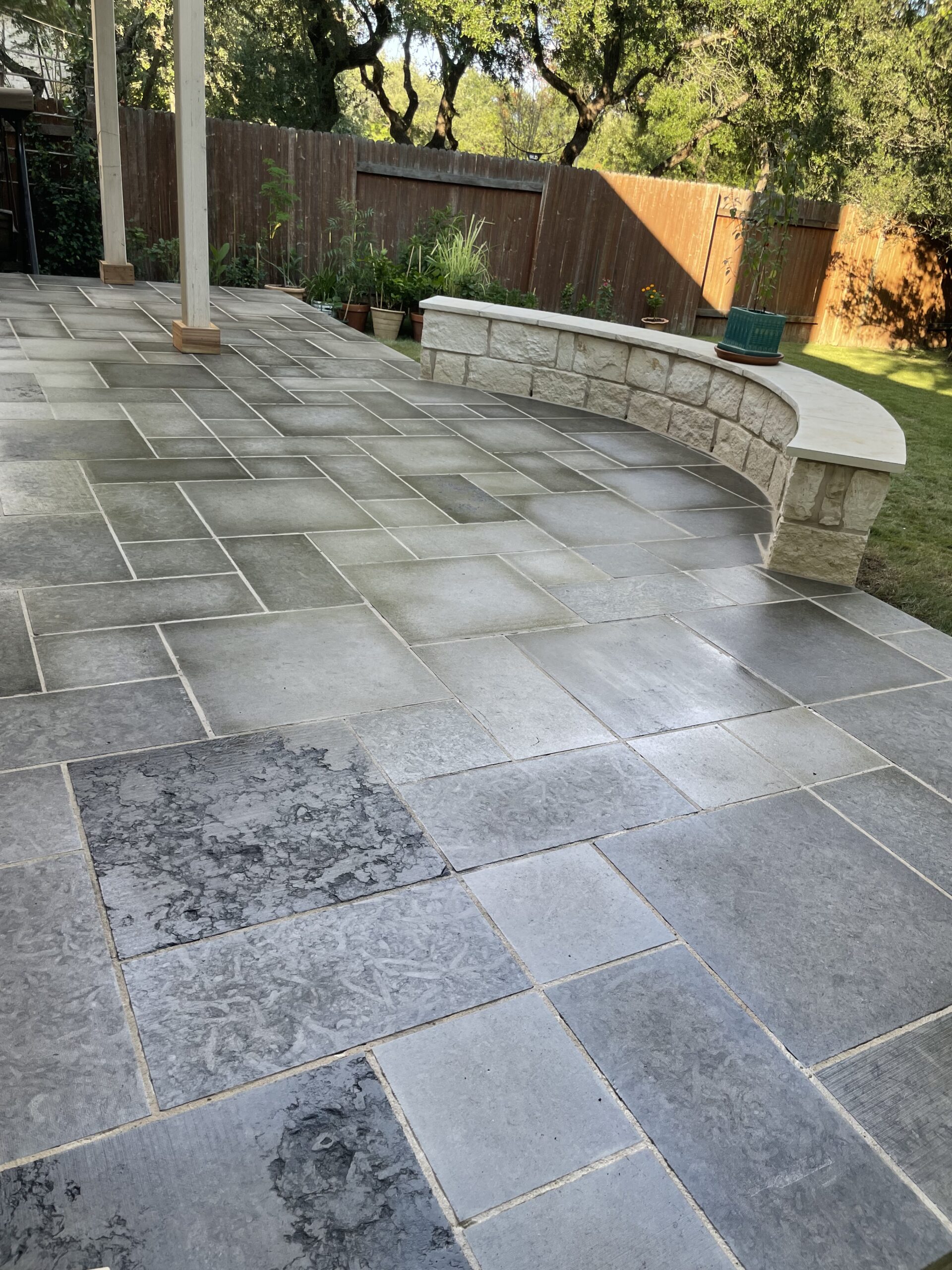
Mixed-material patios are a hallmark of 2025. Pair a concrete field with limestone or brick ribbons, create a herringbone landing at the grill, or cap seat-walls with honed stone for a cool-to-the-touch surface in Texas heat. The blend looks bespoke, adds texture, and helps visually tie patio, pool, and façade together.
Build and Maintenance Essentials
DIY or Pro?
Small, straightforward patios can be DIY, but precision matters: solid base prep, correct forms, drainage, and control-joint placement are non-negotiable. (It’s complicated!) More complex layouts, slopes, or decorative finishes benefit from an experienced crew like our team here at Hometown Decking that can deliver crisp details and a flawless surface.
Curing, Sealing, and Long-Term Care
Under proper curing, concrete typically reaches most of its design strength by around 28 days, plan furniture loads and events with that in mind. Keep surfaces clean with mild detergent and a broom/low-pressure rinse; avoid harsh chemicals that can etch or strip sealers. Reseal every 2 – 3 years to resist moisture, UV, and staining and to keep color looking rich. Address hairline cracks early so they don’t propagate.
Ready to design the patio that fits your home, and how you live? Hometown Decking brings Central Texas craftsmanship, premium materials, and a design-first process to every project. Get a free quote and let’s build your outdoor space with confidence and care.
Fast FAQs Concrete & Masonry Patio Trends
What’s trending for Austin patios in 2025?
Mixed materials (concrete plus limestone/brick), permeable surfaces, large-format grids, warm integral colors, and integrated LED lighting.
Concrete or pavers, what’s better?
Concrete offers seamless, design-forward finishes; pavers allow easy spot repairs. Many clients blend both for style and function.
How long before I can use a new concrete patio?
Plan light foot traffic after the initial set and full design strength around 28 days with proper curing.
How do I keep it looking new?
Gentle cleaning and resealing every 2 to 3 years protect against UV, moisture, and stains.

